
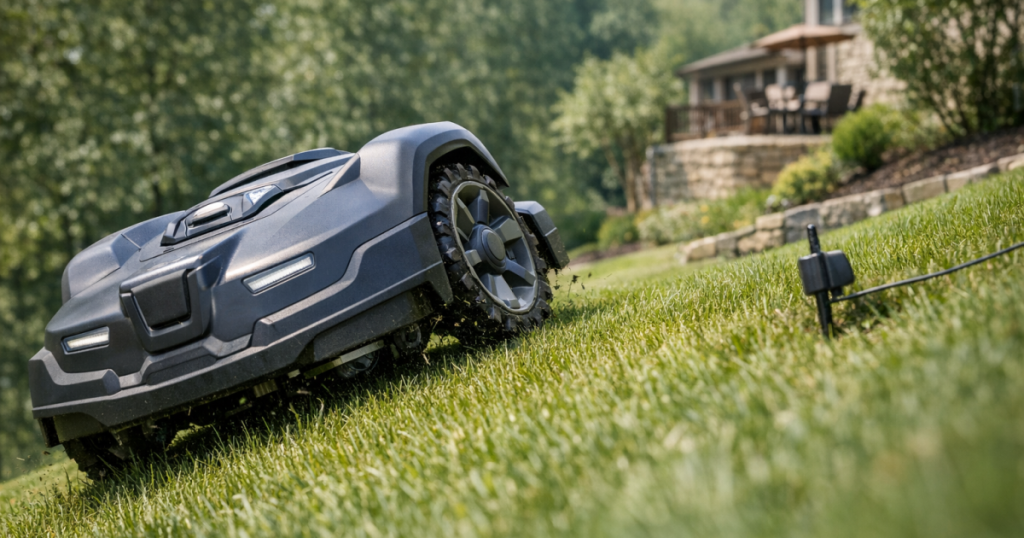
Steep backyards and chopped-up suburban lots are where many robot mowers stop sounding effortless. This Husqvarna Automower 435 iQ AWD review focuses on whether Husqvarna’s premium all-wheel-drive robotic mower has the right mix of traction, boundary flexibility, app control and cutting range for a real residential yard with slopes, zones and a few awkward corners.
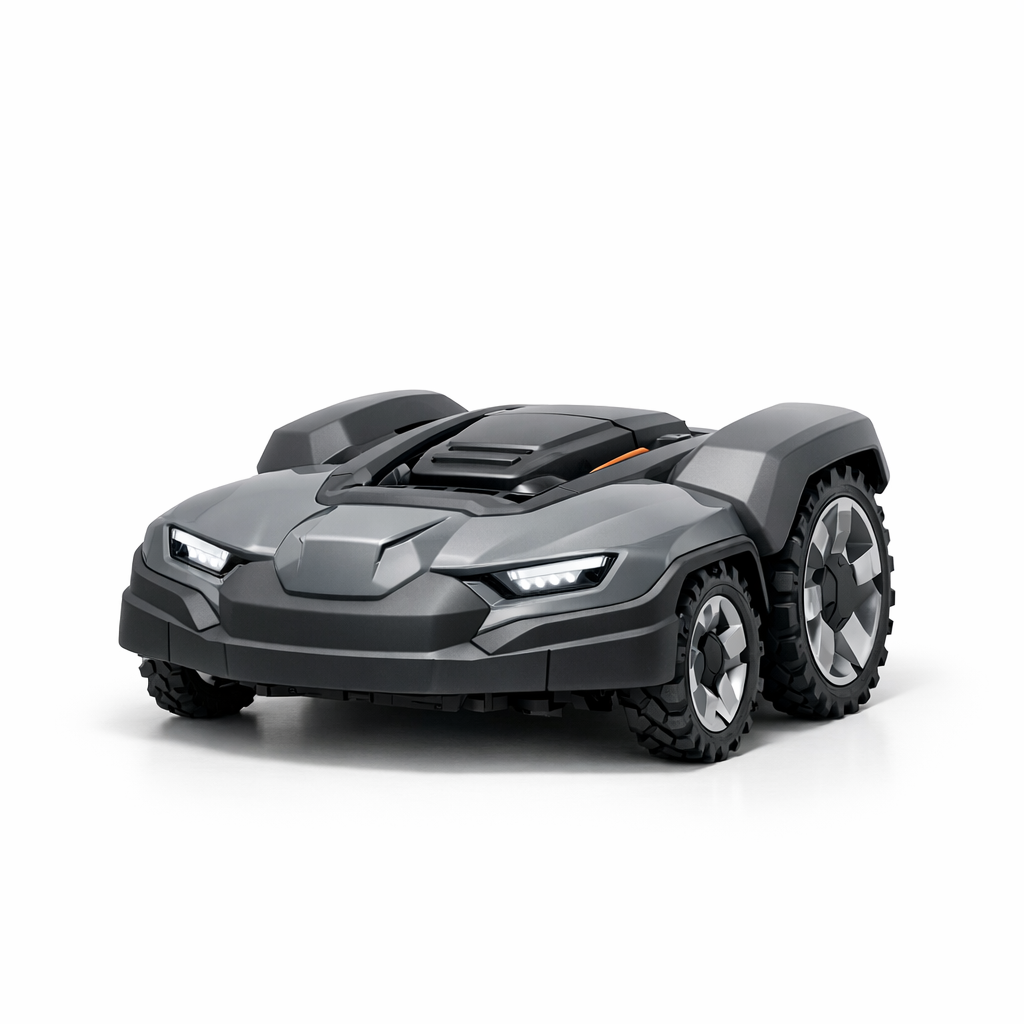
Husqvarna Automower 435 iQ AWD
A strong fit for large, steep residential lawns where AWD traction and flexible boundaries matter most
The Husqvarna Automower 435 iQ AWD is a standalone residential robotic lawn mower built around all-wheel drive, EPOS virtual boundaries, support for physical wire, Automower Connect app control and a published MSRP of $4,999.99. The short verdict: it makes the most sense for homeowners who actually need its slope rating and multi-zone flexibility, not for someone with a flat, simple rectangle of grass.
Product Details
- Product type: all-wheel-drive robotic lawn mower.
- Boundary method: virtual wire or physical wire.
- Max claimed yard size: 56,628 sq ft.
- Max slope rating: 70%.
- Drive system: all-wheel drive.
- Multi-zone support: yes.
- Cutting width: 8.7 in.
- Cutting height range: 1.2–2.8 in.
- Object detection: ultrasonic object detection.
- App control: Automower Connect.
- Theft protection: GPS theft tracking, GeoFence, PIN code and alarm.
- MSRP: $4,999.99.
Where the AWD system earns its keep
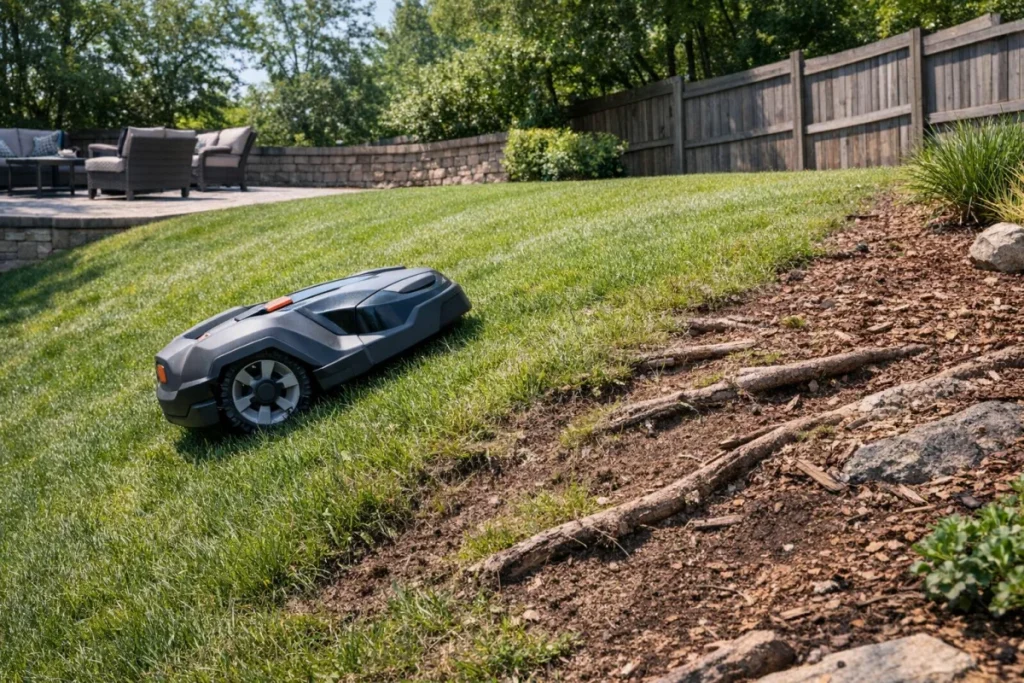
The most important reason to look at this mower is not novelty. It is terrain. Husqvarna positions the 435 iQ AWD as an all-wheel-drive robotic mower, and the published 70% max slope rating is the standout number. For a homeowner with a steep back lawn, a sloped side yard, or a property where a conventional two-wheel-drive robot mower would spend too much time slipping, that AWD setup is the core buying argument.
That does not mean every sloped yard is automatically solved. Slope ratings are controlled specifications, while real lawns add wet grass, uneven soil, exposed roots, mulch borders and wheel ruts from older equipment. Still, all-wheel drive gives this model a clear reason to exist. If your main worry is whether a robot mower can keep working across grade changes rather than just patrol a flat front lawn, this is one of the more serious residential designs to consider.
The claimed 56,628 sq ft maximum yard size also puts it into the large-residential conversation. That number is useful for screening, but it should not be treated like a promise that every square foot of a complicated acre-plus property will behave the same way. A wide-open lawn, a fenced backyard with a narrow gate, and a tree-heavy lot with separated turf areas are very different automation problems even when the square footage looks similar on paper.
Boundary flexibility matters more than it sounds
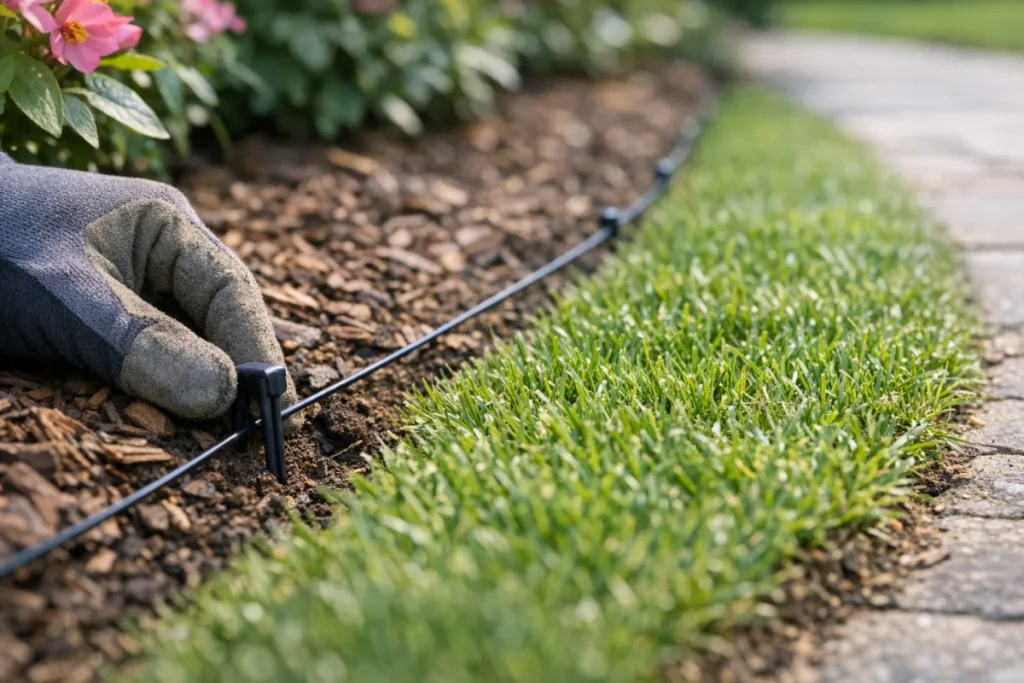
The 435 iQ AWD supports both virtual wire and physical wire. That dual approach is valuable because boundary method is one of the decisions that most affects daily ownership. A virtual boundary system can reduce the need for buried or stapled perimeter wire, while physical wire support gives another path for yards where a traditional boundary layout is still preferred.
In practical terms, that means the mower is not locked into one boundary philosophy. A homeowner with a clean, open lawn may care most about the cleaner setup of virtual boundaries. Someone with tight strips, defined beds, pool fencing, or oddly shaped side yards may appreciate having physical wire as part of the system’s boundary toolkit. The important point is not that one method is universally better; it is that the 435 iQ AWD gives the buyer more room to match the mower to the property.
Multi-zone support reinforces that fit. Separate front and back lawns, a side strip near the driveway, or a fenced play area can all change how useful a robot mower feels after the first week. A single-zone machine can still be capable, but multi-zone support is the difference between “the mower handles the main patch” and “the mower is planned around how the property actually lives.”
If you are comparing this against other current residential robot mowers, the Robot Mower Yard Fit Finder is the cleanest next step for narrowing models by boundary method, slope rating, yard size and ownership preferences.
Cutting range and lawn-result expectations
The cutting deck has an 8.7 in cutting width and a cutting height range of 1.2–2.8 in. Those details matter because robot mowing is usually about frequent, light cutting rather than occasional heavy mowing. A robotic mower is at its best when it keeps growth under control before the lawn looks overdue, not when it is asked to rescue tall grass after two missed weekends.
The 1.2–2.8 in height range should be considered against the grass type, season and homeowner preference. Some lawns are kept shorter for a tight, manicured look; others need a higher setting to avoid stress during hotter stretches. Because the supplied cutting range tops out at 2.8 in, buyers who strongly prefer a taller cut should weigh that detail carefully before treating this as the default premium answer.
The 8.7 in cutting width is also a reminder that this is not a riding mower replacement in the traditional sense. It is an autonomous maintenance mower. The goal is steady coverage across scheduled runs, not one dramatic weekly pass with wide stripes and a trailer full of clippings. For the right household, that trade is exactly the appeal: fewer big mowing events, fewer schedule battles with the weather, and a lawn that spends more days looking acceptably kept.
Controls, zones and object awareness
Automower Connect app control is a meaningful part of the ownership experience because robot mowing depends on schedules, zones and changes over time. Spring growth, summer heat, irrigation timing, pets, kids and weekend use all affect when a mower should run. App control does not make the yard effortless by itself, but it makes routine adjustments less of a chore.
The 435 iQ AWD also includes ultrasonic object detection. That is a useful feature for a mower expected to work around a lived-in yard, but it should not be treated as permission to leave toys, hoses, dog bowls or fallen branches scattered in the grass. Object detection can support the mower’s navigation around obstacles; tidy yards still make for smoother automated mowing.
The theft-protection package is strong on paper: GPS theft tracking, GeoFence, PIN code and alarm. Those features are reassuring on a mower with a premium price, especially for front-yard use or properties where the charging area is visible. They are not a guarantee against theft, but they do make the mower better equipped than a basic unattended yard appliance with no meaningful tracking or access controls.
The value question
At $4,999.99 MSRP, this is not a casual upgrade for someone who simply dislikes Saturday mowing. The value case depends on whether your yard makes use of the expensive parts: all-wheel drive, the 70% max slope rating, multi-zone support, virtual and physical boundary options, and the Automower Connect control layer.
For a flat quarter-acre lawn with clean edges and no meaningful grade, the 435 iQ AWD is likely more machine than the property demands. Its strengths are aimed at owners who have already looked at the yard and seen the hard parts: a bank behind the house, a divided front-and-back layout, a narrow passage, a side slope that gets old fast with a push mower, or an HOA-visible front lawn that needs to look consistently maintained.
That is where the price starts to make sense. You are not just buying a mower that cuts grass. You are buying a more capable platform for a property that would punish a simpler robot mower. For a closer spec-by-spec reference, our Husqvarna Automower 435 iQ AWD yard-fit page keeps the key fit data in one place.
Key questions answered
Is the Husqvarna Automower 435 iQ AWD mainly for large lawns?
Large-lawn capacity is part of the appeal, with a claimed maximum of 56,628 sq ft, but yard complexity matters just as much. A smaller steep or fragmented property can make better use of this mower than a larger, flatter lawn with simple boundaries.
Does the 70% slope rating mean it will handle every hill?
No slope rating can account for every real yard condition. The 70% figure is a strong specification, and all-wheel drive supports the case for difficult terrain, but traction is still affected by surface condition, grass moisture, soil firmness and obstacles.
Is virtual boundary support the main reason to buy it?
Virtual boundary support is important, but the bigger reason is the combination: virtual wire, physical wire, all-wheel drive, multi-zone support and app control. That mix is what makes the 435 iQ AWD a premium fit for complicated residential lawns.
Verdict
Score: 9.0/10
The Husqvarna Automower 435 iQ AWD is an excellent fit for homeowners who need a serious residential robot mower for steep, multi-zone or otherwise awkward lawns. The score is driven most by its all-wheel-drive system, 70% max slope rating, dual boundary-method support and large claimed mowing capacity. Its main limitation is value: the $4,999.99 MSRP only feels justified when your yard actually needs the capability. For the right property, though, this is a confident, high-end choice that can turn a demanding lawn into a calmer automated routine.
Husqvarna Automower 435 iQ AWD
A strong fit for large, steep residential lawns where AWD traction and flexible boundaries matter most
You might also like: Segway Navimow i105.