
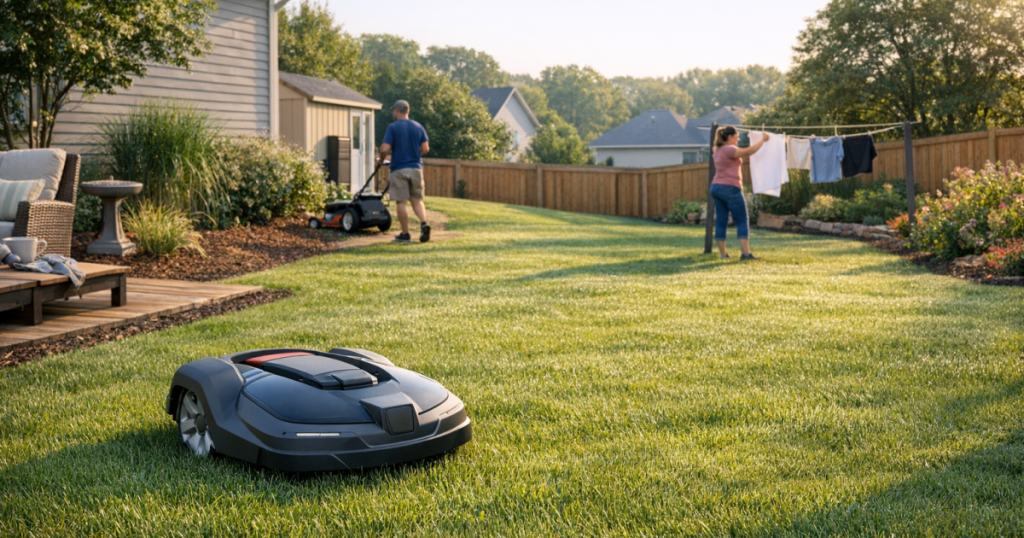
The first month with a robot-mowed lawn is less dramatic than a Saturday scalp-and-stripe session, and that is the point. Instead of waiting for grass to look overdue, the mower trims small amounts often, docks quietly, and turns lawn care into schedule management rather than a recurring chore. The change is visible, but it arrives in layers: neater average height, fewer loud mowing blocks, and a new habit of noticing small yard problems before they become rescue missions.
Main points
- The lawn usually looks more consistently maintained, not freshly transformed overnight.
- The first week is mostly about setup, observation, and finding trouble spots.
- By weeks two and three, the household routine often gets quieter and less weekend-centered.
- Trimming, edging, debris cleanup, and seasonal adjustments still matter.
- The best results come from matching the mower, boundary method, slope ability, and navigation style to the actual yard.
What changes in the lawn by week four
A robot-mowed lawn tends to look tidy in a different way from a traditionally mowed one. The visual payoff is less about bold mower lines and more about the absence of the “we should really mow” moment. Because the machine clips small amounts frequently, grass height stays steadier between weekends, and the yard can look presentable on a Tuesday afternoon without anyone planning a mowing session.
That steady look depends on starting conditions. If the lawn begins the month tall, patchy, wet, or full of sticks, the first few runs may reveal more problems than they solve. Tall grass can overwhelm small robotic cuts, low spots can show scalping, and rough transitions at patios or sidewalks can become repeat stop points. A robot mower is happiest when it is maintaining a lawn that has already been brought under control.
By the end of the first month, many homeowners notice that the lawn’s “average day” improves. It may not look like a professional striped finish, but it looks less neglected between larger yard chores. That matters for front yards, HOA-visible areas, and families who want the place to feel kept up without dedicating every fair-weather weekend to mowing.
Week one: the mower teaches you about the yard
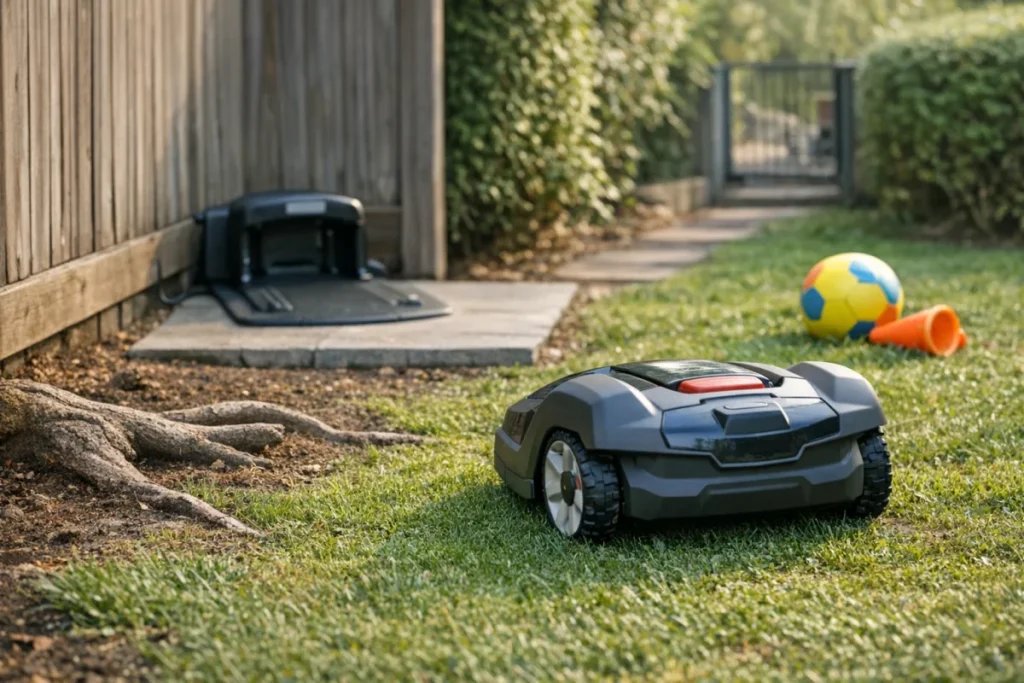
The first week is not the set-and-forget fantasy. It is the shakedown period. You learn where the charging station works, whether the mower can return cleanly, which passages feel tight, where roots or toys interfere, and whether the schedule is too ambitious for current grass growth.
For wire-free systems, the early focus is usually mapping, signal reliability, stay-out zones, and whether the mower understands the property in the same way you do. For boundary-wire systems, it is more about wire placement, corridor behavior, and whether edges or islands were planned realistically. Neither approach is automatically better for every home; yard geometry, tree cover, fences, slopes, and your tolerance for setup all matter.
A useful first-week habit is keeping a simple rescue log. Write down where the mower stopped, what caused it, and whether the fix is a setting change or a yard change. A single stuck moment may mean nothing. The same stuck point three times usually means the lawn is asking for a permanent fix: move a hose, trim a low branch, fill a rut, widen a passage, or rethink the mapped zone.
Week two: the schedule starts replacing the chore
Once the mower is docking reliably and covering the intended areas, the household rhythm begins to change. Instead of blocking off a large mowing window, you start thinking in smaller decisions: when the kids are usually outside, when irrigation runs, when dew lingers, when the dog has the yard, and when you would rather the mower stay parked.
This is where low-noise automated mowing feels quietly luxurious. The lawn is being handled in the background while dinner is happening, emails are being answered, or the weekend is left open for something better than refilling a gas can. You still need to supervise the early pattern, but the mental load shifts from “I need to mow” to “Is the schedule still right for the season?”
Wet grass is a common month-one lesson. Even if a mower can operate in varied conditions, mowing saturated turf can leave clippings, wheel marks, or messy results depending on the yard. Many homeowners get better results by avoiding the wettest parts of the day and adjusting the schedule during heavy growth periods rather than forcing the same routine every week.
Week three: edges become the honest part of the story
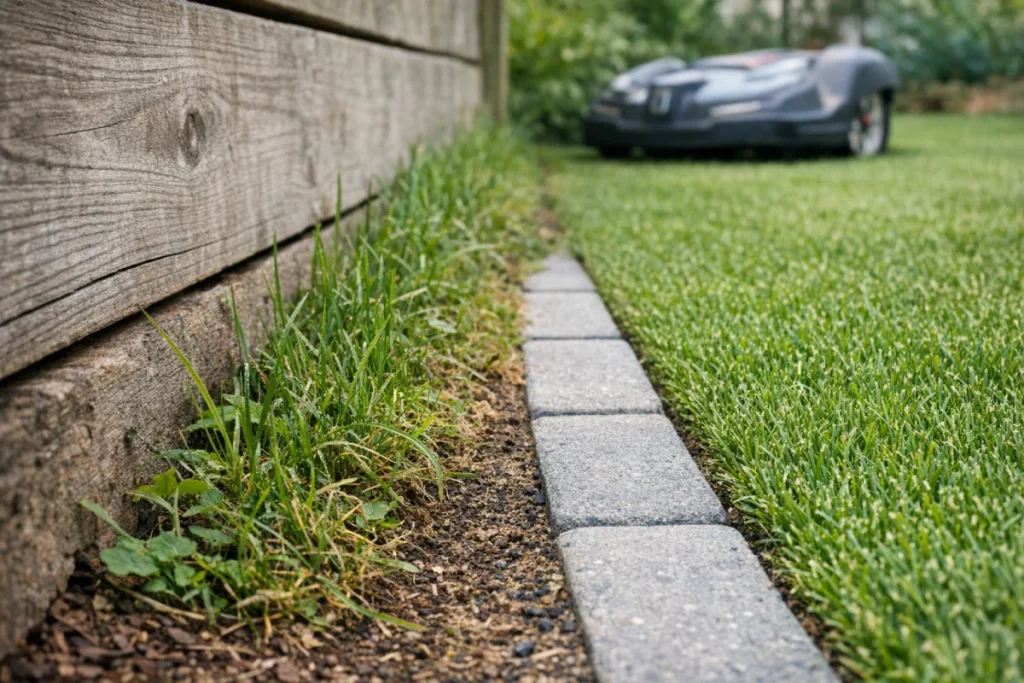
Robot mowers are excellent at frequent maintenance cutting inside their working area. They are not magic edge-finishers. Along fences, raised beds, tree rings, mailbox posts, and some hardscape borders, you should still expect trimming or edging. The difference is that trimming may become a lighter finishing task rather than the final stage of a full mowing ordeal.
This is also when borders start to look like a design decision, not just landscaping detail. Flush paver strips, mow-over edges, smoother transitions, and fewer random obstacles can reduce touch-up work. A yard that is robot-ready is often a yard with fewer little traps: no loose toys, fewer exposed roots in the path, clearer gates, and less clutter around the charging area.
If the mower keeps missing narrow strips, do not immediately assume the machine is poor. Missed grass can come from conservative boundary settings, awkward turn behavior, a passage that is too tight, or an edge the mower is not meant to cross. Reading those marks as clues is one of the fastest ways to improve month-one results.
Week four: the new routine feels normal
By the fourth week, the most noticeable change may be psychological. The lawn no longer announces itself as a weekend obligation every time you pull into the driveway. It is still alive, seasonal, and imperfect, but it is being tended more continuously. That can make outdoor upkeep feel calmer.
The routine usually settles into a few repeat checks. Make sure the cutting area is clear of toys, fallen branches, pet items, and temporary furniture. Glance at the blades and underside according to the mower’s manual and your actual conditions. Watch for track patterns in soft soil. Adjust the cutting height and schedule as growth changes. None of this is maintenance-free, but it is a different category of work: smaller, quieter, and easier to fit around normal life.
This is also the point where a homeowner can make a fairer judgment. A mower that struggled during week one may be performing well after a few yard fixes. A machine that seemed impressive in an open section may show limits around shade, slope, or fragmented areas. Month one is not just a trial of the robot; it is a trial of the whole yard system.
What varies by yard type
Small fenced yards
Smaller lawns can benefit quickly because there is less ground to understand, but fences, gates, play equipment, pets, and patio furniture can complicate the route. The key question is not only square footage. It is whether the mower has a clear, repeatable way to cover the grass and return to charge without needing a person to open gates or move obstacles every time.
Open suburban front lawns
Open front yards often show the cosmetic benefit fastest. Frequent light cutting can keep the home looking cared for from the street. The trade-off is visibility: homeowners may care more about theft deterrence, sidewalk edges, driveway transitions, and scheduling around mail delivery, trash day, or neighborhood foot traffic.
Slopes and complex backyards
Slopes, narrow side yards, retaining walls, tree canopy, and separate lawn areas are where fit matters most. All-wheel-drive models, RTK systems, vision-based machines, and boundary-wire options each solve different problems, but none removes the need to check the property carefully. If your yard has grades, broken zones, or awkward corridors, start with documented model fields in the Robot Mower Yard Fit Finder before getting attached to one feature headline.
Mistakes that make month one harder
- Starting with grass that is too tall: Bring the lawn down to a reasonable height before expecting maintenance mowing to look clean.
- Ignoring the charging station location: A convenient-looking corner may still be poor if approach space, surface level, sky view, or connectivity is weak for that system.
- Scheduling too aggressively: More runs are not always better if the lawn is wet, soft, newly seeded, or heavily used by kids and pets.
- Blaming every stop on the mower: Repeated rescues often point to roots, holes, loose edging, tight passages, or clutter that should be corrected.
- Expecting zero trimming: Most lawns still need edge work, especially around vertical barriers and detailed landscaping.
How to tell whether it is working
A successful first month has practical signs. The mower docks without drama most of the time. The grass height looks consistent across ordinary days. Rescue points are decreasing, not multiplying. The schedule fits around family life. You are trimming edges, not reclaiming the entire yard. Most importantly, the lawn looks acceptable more often than it used to with less loud, high-effort mowing.
If you are comparing models during this stage, look beyond claimed coverage. Check boundary method, slope rating, drive system, multi-zone support, cutting height range, obstacle detection, and app control. A detail page such as the Segway Navimow i105 is useful because it keeps those fields in view instead of reducing the decision to acreage alone. For more demanding yards, comparing entries like the MAMMOTION LUBA 3 AWD 3000H can help you think through drive system, terrain, and setup expectations without assuming one premium feature solves every layout.
Common questions from month one
Will the lawn look better right away?
It may look neater quickly if the grass was already under control. If the yard starts tall, uneven, or cluttered, the first improvement is usually operational: fewer missed chores, clearer problem spots, and a more consistent maintenance pattern.
Does robot mowing eliminate weekend lawn work?
It can remove much of the regular mowing block, but it does not eliminate yard care. You may still trim, edge, clear debris, manage weeds, adjust irrigation, and make seasonal cutting-height changes.
Should the mower run every day?
Not automatically. The right schedule depends on grass growth, weather, soil firmness, yard use, and the mower’s working capacity. A daily pattern can suit some lawns, while others look better with fewer runs timed around dry conditions and household activity.
What to remember
The first month is best judged by trend, not perfection. A good automated setup should make the lawn look consistently kept, reduce noisy weekend labor, and reveal the few yard changes that will make future mowing easier. The machine matters, but the routine matters just as much. When mower choice, setup, schedule, and yard design line up, the payoff is wonderfully ordinary: the grass is simply less likely to look overdue.