
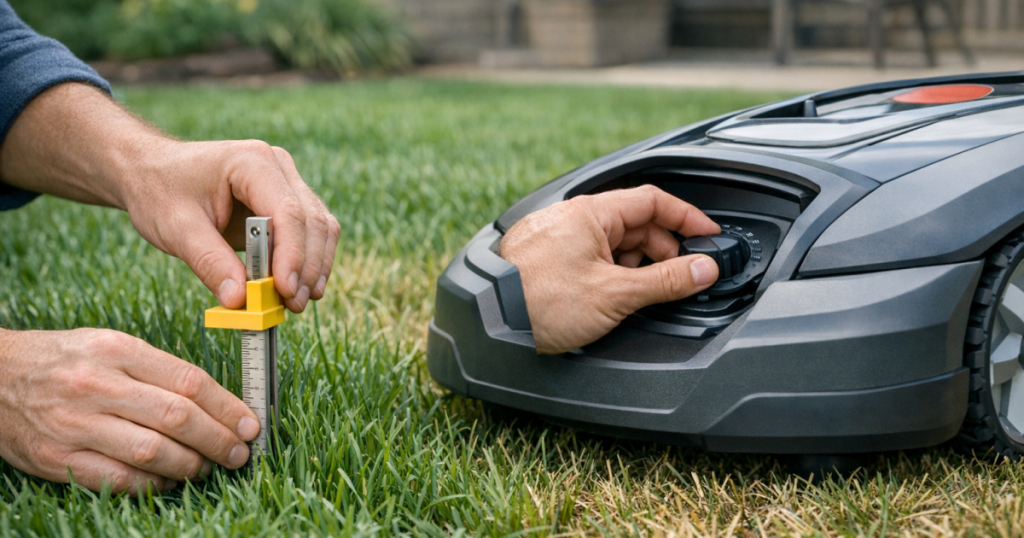
Cut height is where automated mowing starts to look either polished or slightly tired. Set too low, a robot mower can stress the crown of the plant, expose thin patches, and leave summer turf looking thirsty. Set too high for the machine, and the small razor-style blades may skim rather than cleanly trim upright growth. The right robot mower cutting height depends first on grass type, then on season, mower range, and how often the machine runs.
In brief
For most US lawns, warm-season grasses such as Bermuda and zoysia usually tolerate a lower maintained height than cool-season grasses such as tall fescue and Kentucky bluegrass. St. Augustine generally wants to stay taller. A robot mower works best when it is maintaining height, not correcting an overgrown lawn, so start near the upper end of the healthy range, watch the turf for two weeks, then lower gradually only if the grass stays dense and unstressed.
A useful shortcut is to think in terms of the lawn’s “safe operating window.” The low end is limited by scalping risk, heat stress, and the mower’s ability to follow uneven ground. The high end is limited by the robot’s maximum cutting height and whether its small blades can keep upright growth neatly topped. The best setting is usually not the lowest healthy number on a grass chart, but the lowest setting that still leaves the lawn dense, green, and evenly trimmed after repeated quiet passes.
For a first setup, match the height to the most vulnerable part of the yard, not the best-looking strip by the driveway. A sunny, irrigated Bermuda section may tolerate a tidy low cut, while the same mower setting could thin grass under a maple tree or along a fence where airflow and light are weaker. If the yard has mixed conditions, start with the taller, safer setting and use scheduling, zone control, or occasional trimming to refine appearance rather than forcing the whole lawn to suit the toughest area.
- If the lawn looks pale after several days: Raise the setting one step and let it recover before making any other changes.
- If the mower leaves wispy upright blades: Check blade sharpness and mowing frequency before lowering the cut height.
- If wheel tracks appear: A slightly taller cut, drier mowing window, or adjusted schedule may help more than changing the map.
- If the lawn is newly seeded, sodded, or recovering: Stay conservative until roots are established and the surface can handle repeated traffic.
The quiet advantage of a robot mower is consistency. Once the height is close, small corrections matter more than big resets. Give each adjustment enough time to show up in the grass, especially during heat, drought restrictions, or fast spring growth. A lawn that looks calmly uniform every day is usually the sign that the cutting height, mowing frequency, and turf type are working together.
Starting heights by grass type
These are practical homeowner starting points, not a substitute for local extension guidance or cultivar-specific advice. Regional heat, irrigation, shade, soil condition, and mower blade condition can all change the best setting. When in doubt, choose the taller end first; grass forgives a slightly conservative height more readily than a scalp.
- Bermuda grass: Start around 1.25 to 2 inches for many home robot-mowed lawns. Bermuda can be maintained lower when the lawn is level, dense, and actively growing, but many robot mowers have a practical lower limit. If the yard is bumpy or thin, stay closer to 2 inches to reduce scalping.
- Tall fescue: Start around 3 to 4 inches. Tall fescue usually looks and performs better when it is not pushed short, especially during hot US summers. If your mower cannot reach the upper part of that range, it may still tidy the lawn, but summer stress and thinning become more likely.
- Kentucky bluegrass: Start around 2.5 to 3.5 inches. In cooler weather, a slightly lower setting may look neat if the turf is healthy. In summer, a taller setting helps shade the soil and support recovery from traffic.
- Zoysia: Start around 1.5 to 2.5 inches. Zoysia can produce a tight, tidy surface when maintained frequently, but it is slow to recover from damage compared with some grasses. Avoid aggressive height drops, especially on uneven ground.
- St. Augustine: Start around 3 to 4 inches. This is the grass type most likely to expose a mismatch with short-height robot mowers. If a mower tops out below the height your St. Augustine needs in summer, choose a different machine or accept that the lawn may not look its healthiest in heat.
Why robot mowing changes the height decision
A conventional mower often removes a visible amount of grass once a week. A robot mower trims lightly and often, which is easier on the plant when the schedule is right. The trade-off is that most robot mower cutting systems use small pivoting blades rather than a high-lift rotary deck, so they do not always stand tall, coarse, or damp grass upright before cutting it. That matters on tall fescue and St. Augustine more than on a tight Bermuda lawn.
The mower’s own cutting-height range is just as important as the grass recommendation. Before buying, compare the mower’s minimum and maximum listed height against the turf you actually have. The Robot Mower Yard Fit Finder is useful here because cutting height sits alongside slope, boundary method, drive system, and other yard-fit details that affect the real result.
How to change height without upsetting the lawn
The quiet trick is to make the robot boring. Once it is only removing tiny tips, the lawn tends to look consistently presentable rather than freshly attacked. Getting there takes a little patience.
- Cut down first if the lawn is tall: A robot mower should not be expected to tame an overgrown yard in one heroic run. Use a conventional mower or staged cuts to get close to the target height first.
- Begin one notch higher than your goal: Let the mower run for several days and watch for missed tufts, yellowing, or wheel marks. If the turf looks clean and resilient, lower one step.
- Respect the one-third rule: Avoid removing more than about one-third of the grass blade at once. Frequent robot mowing makes that easier, but sudden setting changes can still shock the lawn.
- Give hot weather extra height: Summer is not the season to chase a golf-course look on a mixed suburban lawn. Taller grass shades the soil and helps the plant ride out heat.
- Keep blades sharp: Torn tips make any height look worse. Dull robot blades can leave a gray or frayed cast, especially on coarse grasses.
If you are dialing in a new mower, treat the first week as a controlled observation period rather than a set-and-forget moment. The step-by-step approach in The Seven-Day Robot Mower Trial pairs well with height adjustments because it gives you time to spot stress before it spreads across the whole yard.
Seasonal adjustments that matter
Spring growth
Spring can produce fast, soft growth that overwhelms a light-trimming schedule. Keep the mower running often enough that it is shaving tips, not chewing stems. If clippings begin to clump, raise the height slightly or reduce the amount removed per session.
Summer heat
Raise cool-season grasses such as tall fescue and Kentucky bluegrass as temperatures climb. Warm-season grasses can often stay lower while actively growing, but even Bermuda and zoysia benefit from restraint during drought stress, thin recovery, or irrigation limits.
Shade, slopes, and thin spots
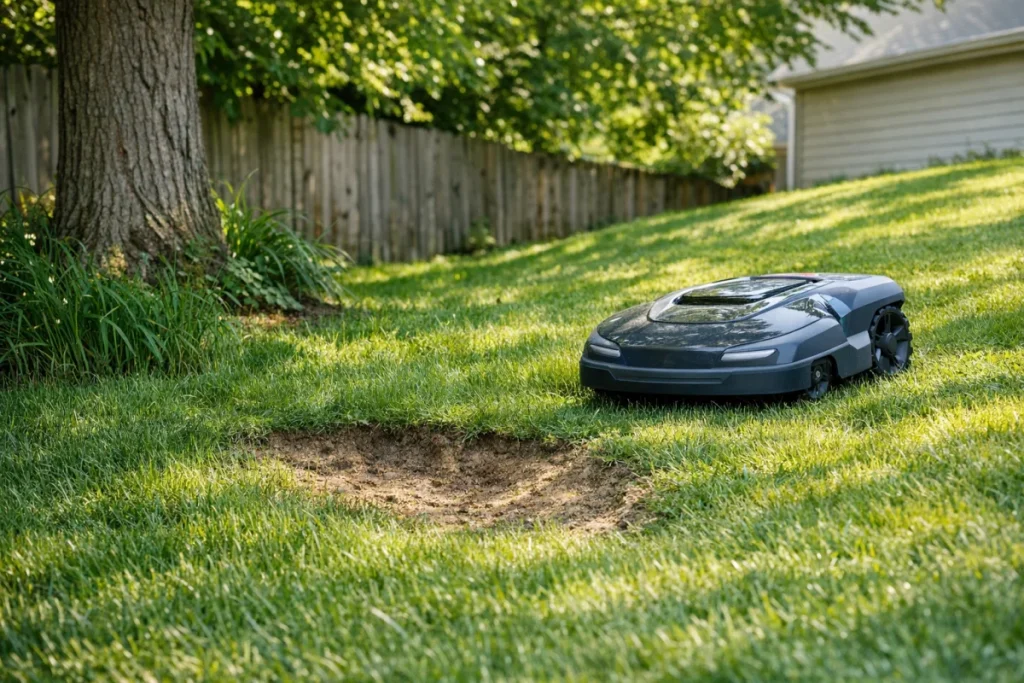
Shaded grass usually needs more leaf area, so a taller setting is safer under trees, beside fences, or along the north side of a house. On slopes and bumpy ground, extra height also gives the mower margin so wheels and chassis movement do not translate into scalped patches.
Common mistakes
- Matching the neighbor’s height instead of the grass: A short Bermuda lawn and a tall fescue lawn can both look excellent. They should not be set the same way.
- Buying a mower before checking max height: This is a real issue for tall fescue and St. Augustine owners. A mower that cannot cut high enough may be quiet and clever but still wrong for the lawn.
- Lowering height to fix missed strips: Missed strips often point to schedule, mapping, wheel traction, blade condition, or passage planning. Lowering the deck can turn a setup problem into turf damage.
- Ignoring irrigation and dew: Wet grass bends and clings. A slightly taller setting and a drier mowing window can improve appearance without changing the machine.
- Expecting automation to erase trimming: Robot mowers reduce weekly mowing labor, but edges, fence lines, tree rings, and raised borders still need a separate plan.
Fast answers
Should a robot mower cut lower than a regular mower?
Not automatically. A robot mower can often maintain a neat lawn at a similar or slightly refined height because it cuts frequently, but the healthy range is still determined by grass type, season, and lawn condition.
What if my lawn has mixed grasses?
Set the height for the grass that needs to stay tallest, usually tall fescue, Kentucky bluegrass in summer, or St. Augustine. Mixed lawns look better slightly tall than unevenly stressed.
Can frequent mowing improve lawn density?
Frequent light mowing can support a more uniform look when height, watering, fertility, and traffic are managed well. It will not fix compacted soil, heavy shade, poor drainage, or a mower that is poorly matched to the yard.
Main lessons
Treat robot mower cutting height as a turf decision first and a gadget setting second. Bermuda and zoysia usually give you more room to run lower. Tall fescue, Kentucky bluegrass, and St. Augustine ask for more height, especially in summer or shade. The best result comes from matching the mower’s height range to the grass, changing settings gradually, and reading the lawn’s response instead of chasing the shortest possible cut.
For a wider view of how the lawn and household routine settle after the first few weeks, A Month With a Robot-Mowed Lawn shows why small schedule and height choices can matter more than dramatic one-day changes.